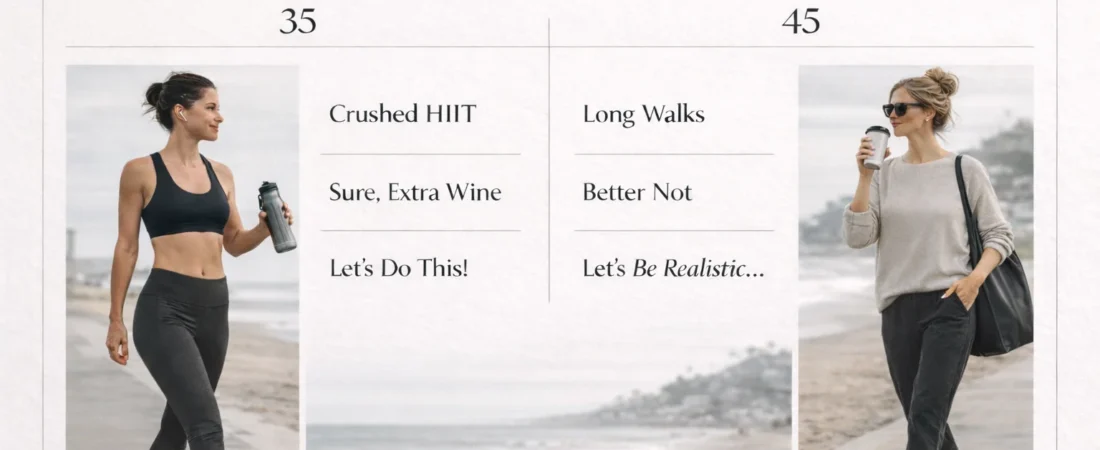
In my 30s, high-intensity workouts felt like a cheat code. I survived sculpt class in a 100-degree yoga studio with neon hand weights and surprise cardio death circuits. I’d leave drenched, eat mostly whatever I wanted, and somehow bounce back the next day.
By my 40s, my metabolism said, “We don’t do that anymore.” Suddenly, the “work harder” approach felt like a negotiation my body didn’t agree to.
Back When Effort Still Paid Off
I didn’t do intense workouts because I loved them. I did them because they worked. Sculpt class made my clothes fit better. Step aerobics kept the jiggle in check. I wasn’t chasing endorphins or enlightenment; I just wanted my body to cooperate.
It was basically the pre-HIIT era, before it was officially branded as HIIT. The kind of workout that could erase a weekend of bad choices in one 60-minute class. I didn’t think about cortisol, recovery, or inflammation. I just cared about whether it got results.
And for a long time, it did. Effort equaled payoff. Sweat equaled tighter jeans. It was simple math that kept me consistent, even though I didn’t actually enjoy the workouts themselves.
When “Try Harder” Lost Its Appeal
I started gaining about 10 pounds a year at 37, and by my early 40s, I wasn’t dragging myself to sculpt class anymore. I wasn’t swapping workouts. I wasn’t even pretending I’d start on Monday. I basically opted out.
It’s not that the workouts stopped working. It’s that the whole idea of working that hard for that long suddenly felt ridiculous. The effort-to-payoff ratio collapsed, and my motivation did too.
My brain just went, “What’s the point?” It wasn’t an emotional breakdown. It was more like a quiet resignation. I didn’t want to fight my body. I didn’t have the energy to overhaul my life. So I didn’t.
The official wellness term for this is probably “lack of motivation,” but the real term is: cost-benefit analysis.
The Quiet Resignation Era
By the time I hit 42, I wasn’t shocked by the weight gain. I wasn’t thrilled either. It was more like, “Yeah… this tracks.”
Not a crisis. Not denial. Just the slow realization that my old math didn’t work anymore.
Trying harder didn’t fix it. Waiting it out didn’t fix it. Ignoring it definitely didn’t fix it. But I also didn’t have the energy for a whole overhaul and a personality reboot.
So I hovered in that weird middle space, not actively doing anything but not totally giving up either. Just watching my body do its thing while I planned to “figure it out later.”
When My Nervous System Said “Absolutely Not”
At some point I realized it wasn’t my muscles that were tired — it was my nervous system.
My body wasn’t asking for a more challenging workout. It was asking for less chaos.
High-intensity felt like I was borrowing energy from tomorrow to survive today, and that math didn’t work anymore. Not with work. Not with stress. Not with sleep that already sucked. Not with hormones quietly rewriting the rules in the background.
It wasn’t that HIIT stopped “working.” It just stopped being sustainable, and I didn’t have the energy to figure out a Plan B yet.
When Simpler Started Making More Sense
So if high-intensity wasn’t sustainable anymore, what was?
If I wasn’t going to push harder, then I needed to push… differently.
I didn’t need a new challenge. I needed something I wouldn’t quit when life got messy. Something I wouldn’t have to psych myself up for.
I didn’t know what that was yet, but I knew it wasn’t HIIT.
When Walking Accidentally Won by Default
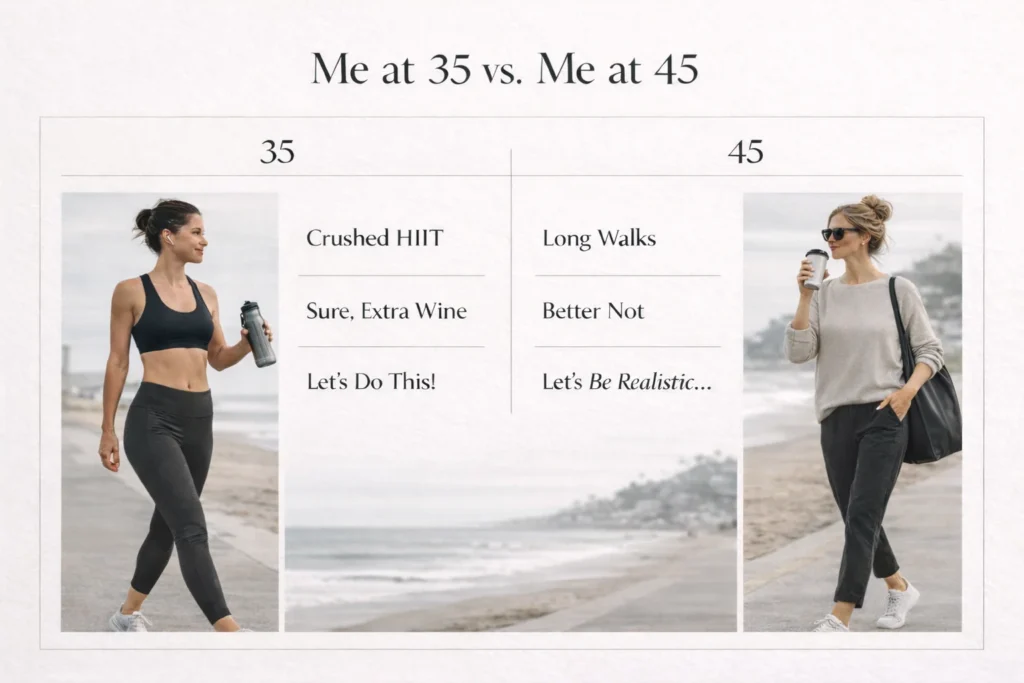
Walking wasn’t my grand strategy. It wasn’t even a plan. It was just the only movement left that didn’t make my nervous system file a formal complaint.
It didn’t demand discipline, matching sets, or a digestive protocol. It didn’t require scheduling my personality around a workout class. I didn’t have to negotiate with myself or mentally audition a whole new identity.
I could just go outside and move my body without it turning into a lifestyle change, a challenge, or a six-week transformation.
The first time I noticed it helping wasn’t some spiritual breakthrough. It was when my jeans stopped punishing me for existing. Then my sleep improved by like 15%, which doesn’t sound impressive until you’re 40 and 15% feels like winning the lottery.
Walking didn’t fix everything. But it didn’t break me either — which honestly felt like progress.
When Consistency Beat Intensity
No one tells you that you can be extremely consistent with something you don’t hate.
I never stuck with HIIT long enough for it to matter because every workout felt like a negotiation. Walking didn’t require negotiations. It didn’t ask me to “push through” or “embrace discomfort.” It just asked for shoes and time.
And, ironically, the thing that felt too simple turned out to be the one I could actually do… repeatedly, without needing a pep talk or a new personality.
When I Stopped Trying to Impress My Metabolism
There’s a point in your 40s where you realize you’re not auditioning for the role of “optimized woman.” Your metabolism isn’t scoring your performance. It’s just responding to inputs like a tired, overworked employee who wants different working conditions.
My 30s metabolism loved chaos. My 40s metabolism filed for boundaries.
Walking gave it boundaries.
Not strict ones, just predictable ones. Low drama. Low chaos. Low cortisol. High compliance.
The Plot Twist No One Warns You About
I didn’t get smaller. Not at first. What I got was energy. Enough to want to do things again. Enough to not dread movement. Enough to make better choices without needing to overhaul my whole identity.
The payoff wasn’t tiny shorts season. It was the absence of dread.
The Anti-Wellness Mic Drop
Wellness culture told me to push harder. Aging told me to get smarter. My nervous system told me to calm down. Turns out they were all right — just not in the way anyone markets it.